

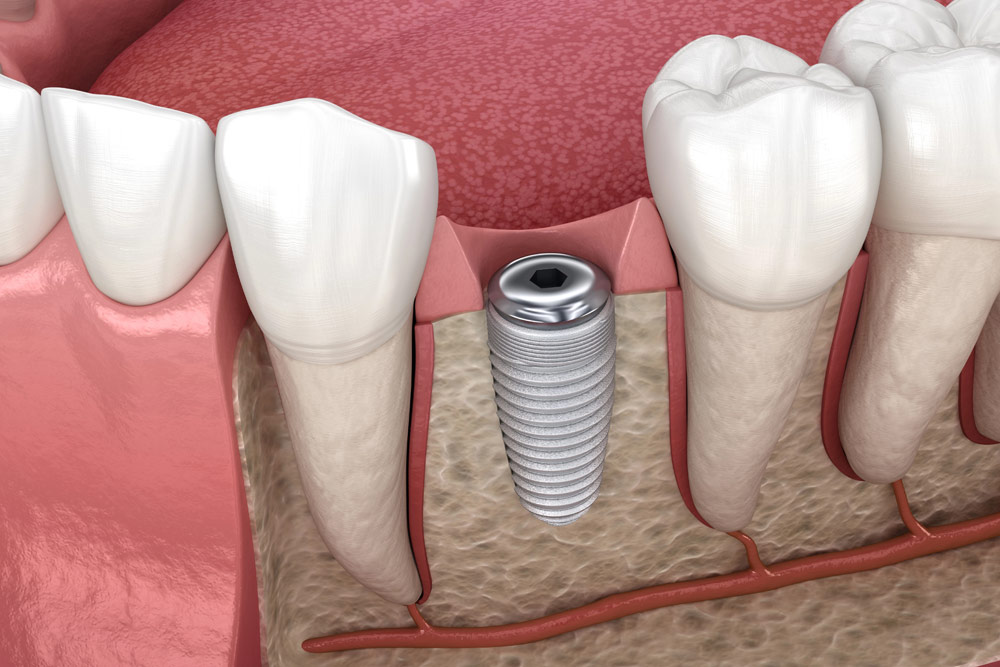
If you notice changes with your dental implant, and are wondering “Is a dental implant falling out an emergency?”, it can be alarming. Dental implants are designed to be a stable, long‑term solution for missing teeth. They mimic natural tooth roots and are meant to stay secure.
But if one feels loose, it is important to assess the situation carefully and act quickly. In this post, we’ll explain when to see an emergency care dentist to effectively protect your oral health and prevent further complications.
What Is a Dental Implant and How Is It Supposed to Work?
A dental implant is a metal post placed into the jawbone that serves as the foundation for a replacement tooth, crown, bridge, or denture. After placement, the bone grows around the implant, securing it firmly in place over several months.
Once healed, an abutment and crown are attached to complete the restoration. This process gives implants the strength and function similar to natural teeth.
Because implants integrate directly with bone, they are often more stable than other tooth replacement options. This stability allows you to eat, speak, and smile with confidence.
However, good oral hygiene and regular dental visits help maintain the health of your implant and surrounding tissues. Like natural teeth, an implant can be affected by gum inflammation, grinding pressures, or injury from accidents.
Signs that Something Is Wrong with an Implant
Some changes around an implant may not be emergencies, but some situations warrant immediate attention. You may experience mild discomfort after placement for a short period, but ongoing pain or a feeling that the implant is loose is not typical.
Signs that you should contact an emergency care dentist right away include sudden movement of the implant, severe pain that will not go away, swelling or pus around the implant, trouble chewing, and gums that bleed excessively.
If the implant post has partially or completely detached, this signals a problem with the surrounding bone or soft tissue. It can also mean that biting forces are not distributed evenly or that infection has compromised the site. Not all issues are emergencies, but any unusual change should be reviewed as soon as possible.
Why Implants Can Become Loose
There are several reasons a dental implant might feel loose. One common cause is peri‑implantitis. This condition is similar to gum disease around a natural tooth and occurs when bacteria infect the gums and bone around an implant.
Early symptoms may include redness, sensitivity, or mild discomfort. If infection progresses, bone loss can occur, weakening support for the implant.
Another cause of implant mobility is mechanical failure. This could mean the internal connection between the implant and the abutment or crown has loosened. Chewing hard foods or trauma from an accident can also contribute to components loosening over time.
In rare cases, the implant may not fully integrate with the jawbone during healing. This could be due to smoking, certain medical conditions, or inadequate bone quantity and quality at the implant site. In cases where osseointegration is incomplete, the implant may never feel fully secure.
When You Should Seek Emergency Dentist Care
Is a dental implant falling out an emergency? If this is your concern, know that acting quickly can save time, discomfort, and additional procedures. Contacting an emergency dentist is advised if the implant feels loose, has shifted, or if there is significant pain or swelling. Even if the implant is not fully dislodged, waiting could allow infection to spread or bone loss to worsen.
An emergency dental care appointment allows the dentist to evaluate the implant site, check for signs of infection, examine the prosthetic components, and take X‑rays if needed. Early evaluation helps the dentist determine whether the implant can be stabilized or if other treatment steps are needed. It also helps protect your remaining oral structures and prevents further complications.
What to Do While You Wait for Dental Care
If you cannot be seen immediately by an emergency dentist, there are things you can do to manage discomfort and prevent further irritation. Rinse gently with warm salt water to help calm inflamed gums. Avoid biting on the area and stick to soft foods to lessen pressure on the implant. Do not attempt to wiggle or adjust the implant yourself.
If there is bleeding, apply a clean cloth or gauze with light pressure. Over‑the‑counter pain relievers can help ease discomfort temporarily, but they are not a substitute for a professional assessment. Note the timing and severity of your symptoms. This information will help your dentist make a complete evaluation when you arrive.
How an Emergency Dentist Evaluates the Situation
When you arrive at an emergency dentist in Baton Rouge, LA, your dentist will examine the implant, crown, and gum tissue carefully. X‑rays allow assessment of bone levels and the integrity of the implant connection. The dentist will check for signs of infection, bone loss, or inflammation that may have affected the implant’s stability.
If the abutment or crown has loosened, the dentist may be able to re‑secure or adjust those parts without removing the implant. If infection is present, treatment with cleaning below the gum line, antibiotics, or soft tissue therapy may be necessary. In cases where the implant has lost significant bone support, the dentist will discuss options for removal and replacement.
Can a Fallen Implant Be Fixed?
In some situations, a dental implant that feels loose may be saved. If the crown or abutment is the issue, tightening or replacing those components can restore function. Dental specialists may also treat inflamed soft tissue or manage infection to halt bone loss. When bone support is still adequate, thoughtful treatment can protect the implant’s future.
If, for instance, your full mouth dental implant has lost too much support, it may need to be removed. Following removal, your dentist will help you decide on the next steps. Bone grafting is sometimes needed to rebuild lost bone before placing a new implant. Your dentist can guide you through the process and help you plan for a successful outcome.
Preventing Future Implant Problems
Protecting your dental implant involves good daily oral care, regular check‑ups, and addressing habits that could damage your teeth. Brushing and flossing carefully around the implant site reduces the risk of infection. Regular dental visits allow your dentist to monitor bone levels and check stability before issues become severe.
Wearing a mouthguard during sports or at night if you grind your teeth can also reduce stress on your implant. Smoking increases the risk of implant failure, so avoiding tobacco products supports healing and long‑term stability. Open communication with your dentist about any concerns helps catch small problems before they grow.
Schedule Your Emergency Dental Appointment
At Grand Family Dentistry, our team understands how worrying it can be when dental implants feel unstable. We offer emergency dental services in Baton Rouge, LA so you can get prompt, attentive care when an issue arises. With advanced diagnostic tools and gentle techniques, we evaluate implant concerns quickly and determine the best course of action for your comfort and health.
Schedule your visit with our emergency dentist in Baton Rouge, LA and get the attention you need from a team that values your comfort and long‑term oral health.