

Quick Summary
Children should have their first dental visit after their first tooth appears and no later than their first birthday. Early visits allow the dentist to monitor tooth and jaw development, check for signs of decay and provide guidance on brushing, feeding and oral habits. Starting regular dental visits early can also help children become comfortable with the dental office and establish healthy oral care routines as they grow.
A first dental appointment may seem early when your baby has only one tiny tooth, but that tooth already needs care. If you have searched “when should child first see dentist,” the answer is earlier than many parents expect. Starting dental visits during infancy gives your child a familiar place for routine care as their smile develops.
When Should Your Child First See a Dentist? Timing the First Visit
The American Dental Association (ADA) advises parents to schedule the first visit after the first tooth appears and no later than the first birthday. Teeth can develop cavities as soon as they erupt, so an early appointment gives the dentist a chance to examine the mouth and help parents build good habits from the beginning.
For Baton Rouge families, choosing a pediatric dentist in Baton Rouge, LA, or a family practice that treats young children can make this milestone easier to manage. The goal of an early visit is not to put a baby through a long procedure, but to check development, look for early concerns, and help parents feel confident about home care.
Parents sometimes assume they can wait until all the baby teeth come in or until a child can sit independently in the dental chair. Waiting that long can miss an opportunity to spot early decay, feeding-related concerns, or habits that may affect the teeth and jaw.
Why Does the First Dentist Visit for Baby Happen by Age One?
Baby teeth play an important role long before permanent teeth arrive. They help children chew, learn speech patterns, and hold space for the adult teeth that will eventually replace them.
Early childhood cavities can develop quickly because newly erupted teeth are exposed to bacteria, frequent snacks, milk, juice, and other carbohydrates. A dental visit gives parents practical guidance on brushing, feeding routines, and other habits that can influence a young child’s oral health.
The first dentist visit for a baby also creates a baseline for future care. The dentist can see how teeth are erupting, examine the gums and jaw, and compare those findings with later visits as the child grows.
What Happens During a Child’s First Dental Appointment?
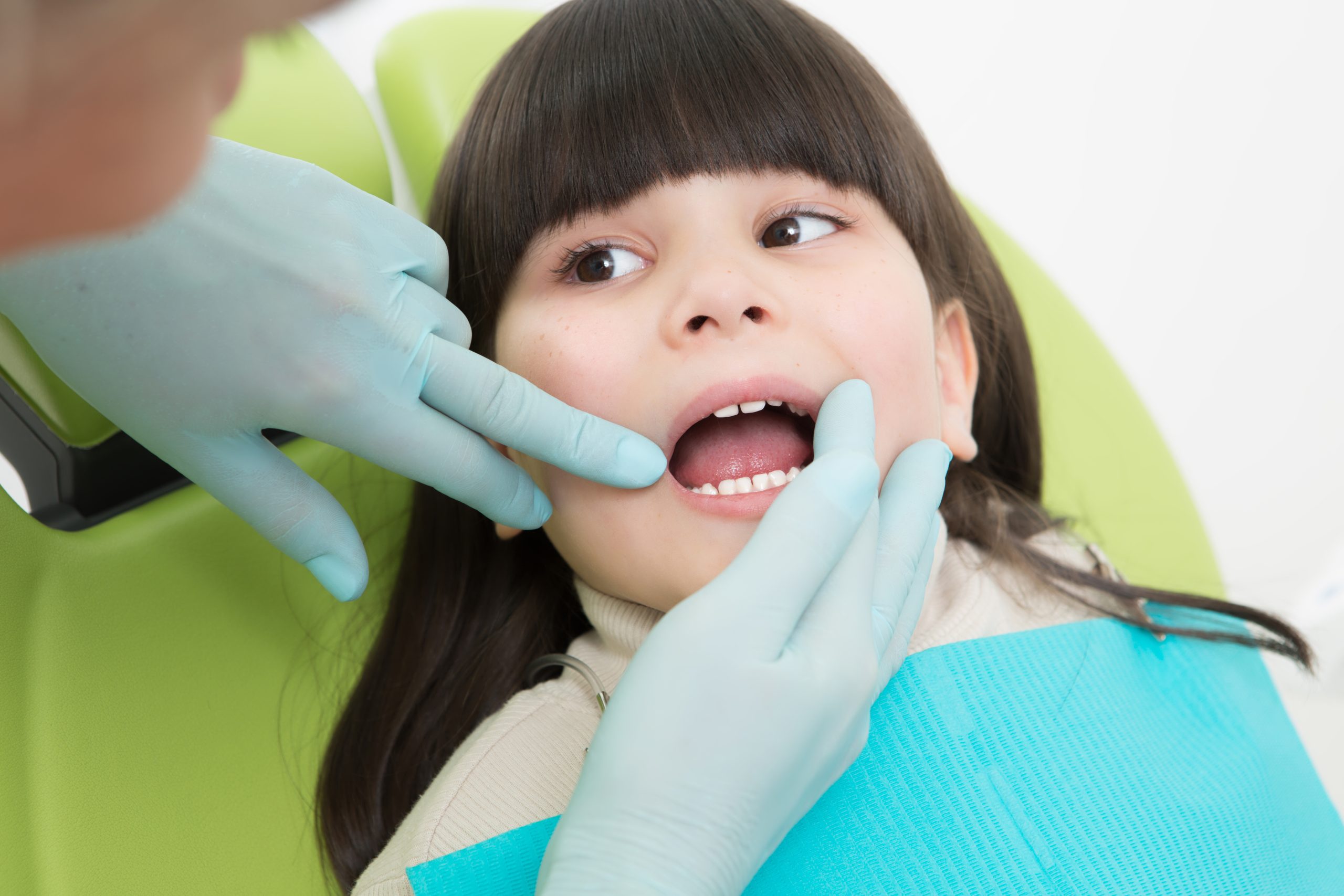
A baby’s first appointment is usually simple and focused on examination, prevention, and parent education. According to the ADA, the dentist checks the teeth and jaw, looks for cavities or mouth injuries, cleans the teeth, and shares tips for daily care.
Very young children do not always need to sit in the dental chair by themselves. A parent may hold the child on their lap while the dentist completes the examination, which can make the setting feel less unfamiliar.
Parents should also expect time for questions. Teething, thumb sucking, pacifier use, brushing, feeding habits, and tooth eruption are all reasonable topics to discuss during an early visit.
Will My Baby Need X-Rays at the First Visit?
Not every baby needs dental X-rays at the first appointment. The dentist makes that decision based on the child’s age, development, visible findings, dental history, and the information needed to evaluate areas that cannot be seen during a regular examination.
Parents can ask why an X-ray is being recommended and what the dentist hopes to learn from it. Clear explanations help parents understand each part of their child’s care instead of treating every visit as a one-size-fits-all appointment.
How Can Parents Prepare for a First Dental Visit?
Choose an appointment time when your child is normally rested and comfortable. The ADA recommends avoiding naptime, offering a light meal beforehand, brushing before the appointment, and saving snacks until after the examination.
Use calm, simple language when you talk about the dentist. You can tell your child that the dentist will count and look at their teeth, and you can practice opening wide together at home.
Books or child-friendly videos about dental visits can make the experience feel more familiar. Try not to introduce frightening ideas such as pain, shots, or drilling when your child has not raised those concerns.
Parents can prepare themselves as well. Write down questions about teething, brushing, pacifiers, thumb sucking, fluoride, feeding routines, or anything unusual you have noticed in your child’s mouth.
What If My Child Cries or Will Not Sit Still?
Crying, wiggling, or refusing to sit alone can be completely normal during an early dental visit. The ADA notes that dental teams understand the appointment is a new experience, particularly for babies and toddlers.
Stay calm and follow the dental team’s directions if your child becomes upset. Your reaction can shape how your child interprets the situation, so a steady tone and familiar reassurance can help the visit move forward.
A good kids’ dentist in Baton Rouge should communicate in an age-appropriate way and adapt the pace when possible. Some children warm up quickly, while others need several routine visits before the setting feels familiar.
What Should Parents Do Before the First Tooth Appears?
Oral care can begin before the first set of teeth erupt. Gently wiping a baby’s gums with a clean, soft cloth can keep the mouth fresh and establish a simple care routine.
As the first tooth appears, begin brushing it gently with an age-appropriate toothbrush. Ask your dentist about the right amount of fluoride toothpaste for your child’s age and current needs.
Parents should also pay attention to repeated exposure to sugary drinks and frequent snacking as children grow. Regular routines around meals, drinks, and brushing can make daily dental care easier for both the child and the parent.
How Often Should Children Return After the First Visit?
The first appointment starts an ongoing relationship rather than completing a one-time task. Your dentist will recommend a recall schedule based on your child’s age, cavity risk, development, home habits, and any findings from the examination.
Many families become accustomed to routine dental visits about twice a year, but the right schedule can differ from one child to another. A child with active decay, enamel concerns, or other dental needs may need to return more often.
Keeping regular appointments also gives the dental team opportunities to reinforce brushing habits and watch changes as baby teeth erupt. Familiar visits may also help children become more comfortable with dental care before they ever need treatment for a problem.
When Should You Call a Dentist Before the Planned First Visit?
The age-one recommendation is a general milestone, not a reason to ignore a problem that appears earlier. Contact a dentist if you notice an injured tooth, unusual swelling, persistent bleeding, discoloration, a visible spot that looks like decay, or another change that worries you.
A fall or bump to the mouth can also justify a dental call, even when a child cannot explain what hurts. The dental team can tell you what to watch for and if the child should be examined promptly.
Parents should also ask about feeding or oral habits if they are uncertain about their effect on developing teeth. Getting guidance early can prevent guesswork and help you make decisions that fit your child’s stage of growth.
How Do You Choose a Pediatric Dentist in Baton Rouge?
Look for an office where the team regularly cares for children and explains treatment clearly to parents. A welcoming approach matters, but so does the ability to monitor growth, discuss preventive care, and address dental problems when they arise.
A pediatric dentist in Baton Rouge may focus specifically on children, while some family dental practices see patients across several age groups. The right choice depends on your child’s needs, comfort level, and the type of dental care your family prefers.
Ask how the practice handles first visits, nervous children, preventive cleanings, examinations, and dental emergencies. You can also ask how parents participate during appointments and what the office recommends for maintaining healthy habits at home.
How Can Early Dental Visits Make Future Care Easier?
A child who visits the dentist before there is pain can learn that dental appointments are part of normal health routines. That experience is different from meeting a dental team for the first time during an urgent problem.
Early visits also give parents a place to ask questions as new stages appear. Teething gives way to a full set of baby teeth, brushing becomes more independent, and eventually permanent teeth begin to arrive.
As children grow, their dental needs change with their diet, habits, activities, and development. A continuing relationship with a family dentist in Baton Rouge can make it easier to follow those changes and discuss the next steps at each stage.
Start Your Child’s Dental Care With Confidence
The simplest answer for parents is to plan the first dental visit after the first tooth appears and no later than the first birthday. That early appointment lets the dentist check development, look for signs of decay, and help you establish practical routines that can grow with your child.
Parents do not need to wait for a full mouth of teeth, perfect cooperation, or a dental problem before making an appointment. Starting early can turn dental visits into a familiar part of family life rather than something reserved for toothaches.
Give Your Child a Positive Start at the Dentist
At Grand Family Dentistry, we care for families with pediatric dentistry, dental cleanings, exams, and other services designed for growing smiles in Baton Rouge. Request an appointment with our team to start your child’s dental care with a friendly visit focused on their current needs.
FAQs
What age should my child first see a dentist?
Your child should visit a dentist after the first tooth erupts and no later than the first birthday. Starting at this age allows the dentist to examine early tooth development and discuss home care with parents. We recommend a visit within six months of the first tooth appearing or by age one.
What happens during a baby’s first dental visit?
The first appointment generally focuses on examining the teeth, gums, jaw, and overall oral development. Parents can also ask about brushing, teething, feeding habits, pacifier use, thumb sucking, and other concerns. The visit is usually kept simple so a young child can begin getting comfortable with routine dental care.
Should I wait until my child has several teeth before scheduling a dental visit?
No. Parents do not need to wait for several baby teeth or a complete set of primary teeth. Dental care should begin once the first tooth appears because decay can affect baby teeth, and early appointments give parents useful guidance before more teeth erupt.
How often should my child visit the dentist after the first appointment?
Many children visit the dentist about every six months, although the schedule may vary based on cavity risk, oral development, and individual dental needs. A dentist can recommend an appropriate schedule after examining your child. Some children may need more frequent care.